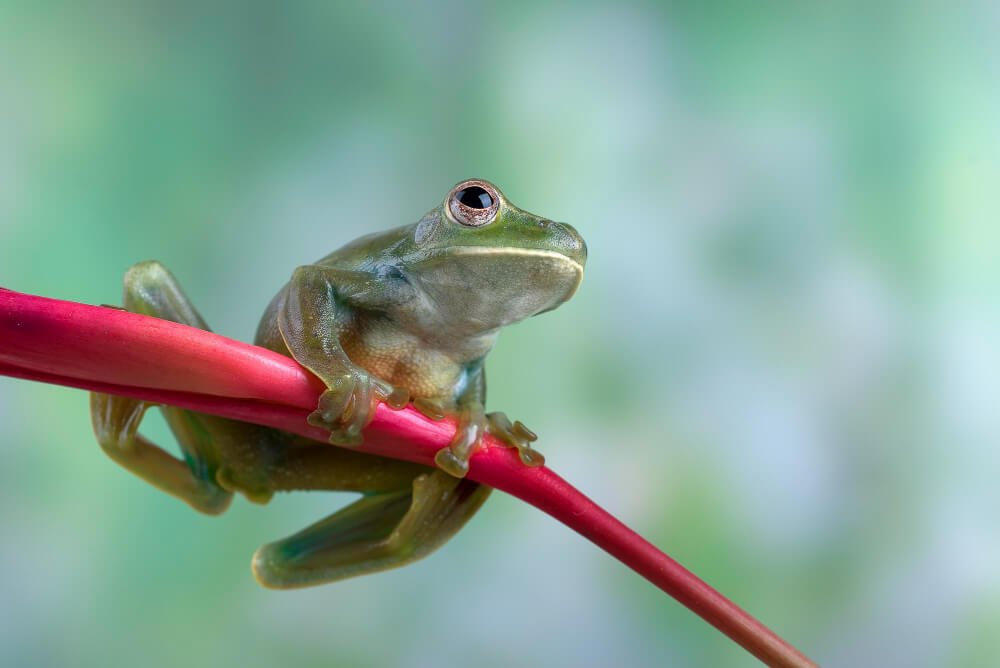
Science of Kambo
The secretion of the Amazonian Phyllomedusa bicolor frog contains at least sixteen bioactive peptides with diverse, well-studied physiological effects. Below are the main compounds and their functions:
Main Peptides and Their Functions
Dermorphin: A natural opioid peptide with very high affinity for μ-opioid receptors, exhibiting analgesic potency 30–40 times greater than morphine, yet without causing classic dependence.
Deltorphin I & II: Opioid peptides with high affinity for δ-opioid receptors. They produce potent and selective analgesic effects without the addictive potential of synthetic opioids.
Phyllocaerulein (also called caerulein): also called caerulein, stimulates gastrointestinal motility, promotes digestive secretions, and has central analgesic properties.
Phyllomedusin: A tachykinin peptide that induces hypotension, stimulates exocrine secretions (including tears and saliva), and causes smooth muscle contraction.
Phyllokinin: A bradykinin-like peptide that regulates blood pressure by inducing vasodilation.
Sauvagine: A peptide analogous to corticotropin-releasing hormone (CRF). It activates the hypothalamic–pituitary–adrenal (HPA) axis, modulates the stress response, and can induce tachycardia and fluctuations in blood pressure.
Dermaseptins: A family of antimicrobial peptides (27–34 amino acids in length) that exhibit broad-spectrum activity against bacteria, fungi, and parasites, while remaining non-toxic to human cells.
Adenoregulin: A bioactive peptide that interacts with neurotransmitters such as adenosine, adrenaline, and serotonin. It may support immune regulation and modulate the autonomic nervous system.
Other Compounds:
In addition, the secretion contains molecules such as bombesin, preprotachykinin B, neurokinin B, rana-tachykinin A, T-kinin, urechistachykinin II, and various bradykinin variants — all associated with vascular or neuromodulatory functions.